
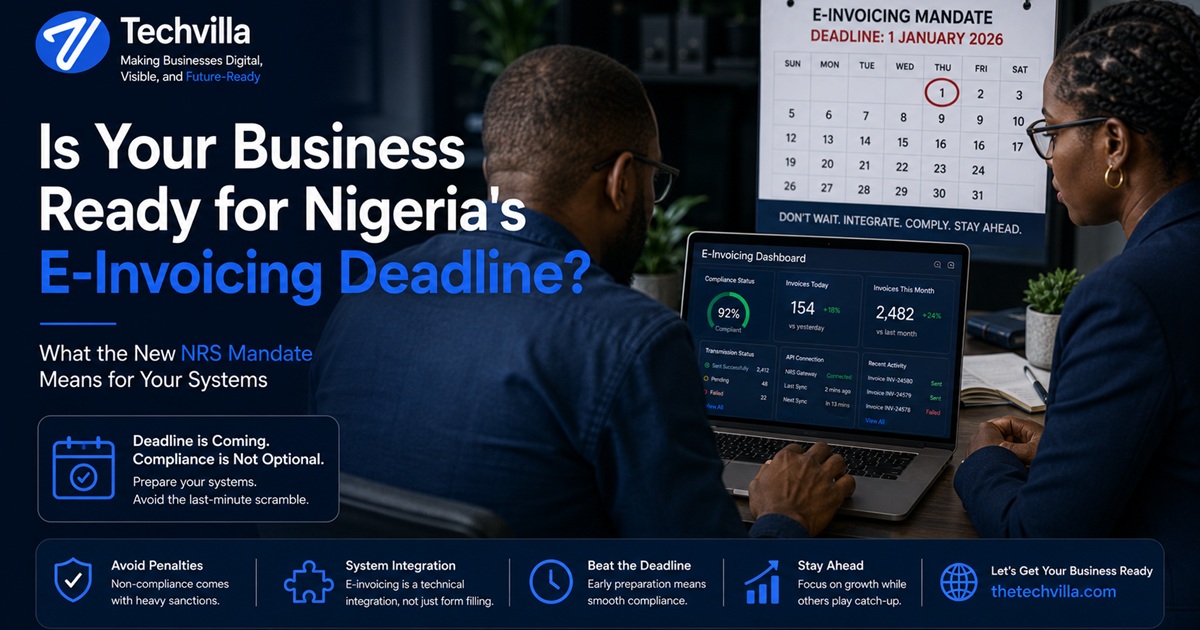
If your business turns over ₦5 billion or more annually, Nigeria's new e-invoicing mandate is not a future concern. It is already here. The Nigeria Revenue Service set July 31, 2026 as the compliance deadline for large taxpayers, and enforcement monitoring has already begun. If your business is smaller than that threshold, this is still worth understanding now, because medium-sized taxpayers are next in line for onboarding, and the businesses that prepare early will avoid the scramble that large taxpayers who waited are now facing.
What Is Nigeria's E-Invoicing Mandate?
The National e-Invoicing and Electronic Fiscal System, also known as the Merchant Buyer Solution, is a new digital tax administration framework requiring businesses to transmit their invoices electronically to a central NRS platform in real time, rather than issuing invoices the traditional way and reporting taxes separately at filing time.
In practice, this means a business's accounting or enterprise software needs to be properly integrated with the NRS platform through an approved Access Point Provider or Systems Integrator, tested for accuracy, and actively transmitting compliant invoices carrying a valid Invoice Reference Number before any deadline arrives.
The government's stated goal is straightforward: improve transparency, strengthen tax compliance, and modernise how revenue is collected across Nigeria. For businesses, though, the practical reality is that this is a technical integration project with a hard deadline attached, not a form to fill out once and forget.
Who Does This Affect Right Now?
As things stand, the mandate directly applies to large taxpayers, defined as companies with an annual gross turnover of ₦5 billion or above. The NRS has confirmed that compliance monitoring is already underway for this category, and companies that fail to meet integration requirements risk regulatory and enforcement action under existing tax laws, along with potential complications for future VAT reconciliations and tax audit clearances.
Medium taxpayers are expected to be onboarded in phases later this year. If your business does not currently meet the large taxpayer threshold, this is still relevant to you, because the timeline for smaller businesses is shortening, not disappearing. Waiting until your business receives a formal onboarding notice before thinking about system readiness is how businesses end up rushing an integration under deadline pressure instead of doing it properly.
Why This Is Harder Than It Sounds
For many Nigerian businesses, the accounting or invoicing software currently in use was never built with this kind of real-time government integration in mind. Some businesses are still relying on manual invoicing, basic spreadsheets, or accounting software that has no direct pathway to connect with an Access Point Provider or Systems Integrator at all.
Getting this right involves several distinct steps: assessing whether your current accounting or ERP system can even support the required integration, choosing and connecting with an approved Access Point Provider or Systems Integrator, cleaning up customer and supplier data such as Tax Identification Numbers to prevent transmission errors, and thoroughly testing the system before it goes live, since errors in a real-time government reporting system are far more visible than a mistake buried in a private spreadsheet.
This is precisely the kind of project where treating technology as a one-time fix rather than an ongoing responsibility creates real risk. A business that integrates its systems once, without anyone monitoring whether that integration keeps working correctly as software updates, staff changes, and business processes evolve, is exposed to compliance gaps nobody notices until an NRS audit flags them.
What Should Nigerian Businesses Do Now?
If your business is already above the large taxpayer threshold and has not completed integration, the priority is immediate. The NRS has been explicit that compliance monitoring is active and that regulatory sanctions apply to defaulters.
If your business is not yet at that threshold, the smarter move is to start preparing now rather than waiting for an onboarding notice. This means having a genuine conversation about whether your current business software and systems can realistically support this kind of integration when the time comes, or whether your business needs custom software built with this kind of compliance requirement in mind from the start, rather than trying to retrofit an old system under pressure later.
Businesses that treat this as a strategic technology decision now, rather than a compliance emergency later, will have far more control over the process, the cost, and the timeline.
Where Techvilla Fits Into This
This is exactly the kind of technical integration challenge that falls squarely within custom software development and IT consulting, not something a business should be figuring out alone under deadline pressure. Whether your business needs an assessment of whether your current systems can support e-invoicing integration, custom software built to handle it properly, or ongoing management to make sure the integration keeps working as your business grows, this is a technology decision with real financial consequences attached if it is handled poorly.
At Techvilla, we help Nigerian businesses assess their systems, plan for regulatory technology requirements like this one, and build or adapt software that keeps pace with where Nigeria's digital tax administration is heading, so you are ready before the deadline arrives, not scrambling after it does.
Chat with us on WhatsApp or start a free consultation.
Because the goal is not just to build a website. The goal is to make your business digital, visible, and future-ready.
Need technical assistance?
I'm Techvilla Admin. We help businesses move from offline to online with simple, clear steps. If you have questions about this article or need help with your project, let's chat.